Delivery Text Scams: The Three Details That Give Them Away
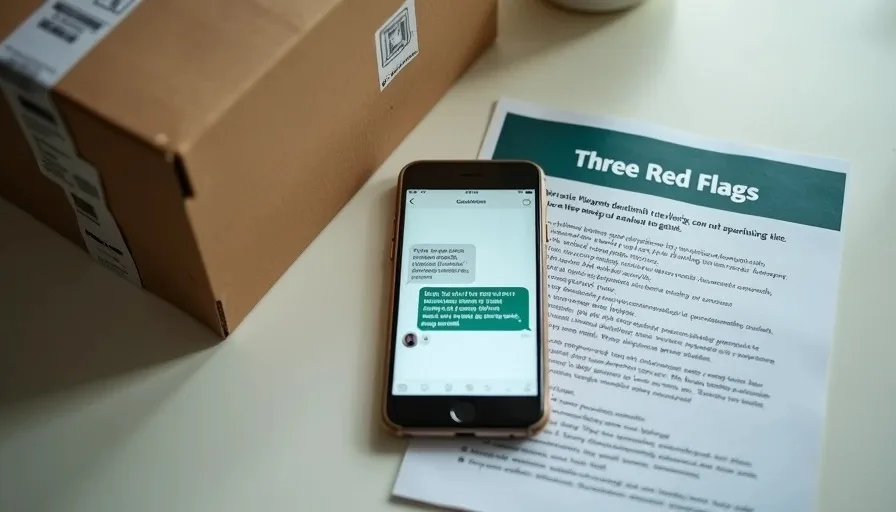
The text arrives in the middle of the day. “Your package is held due to an incorrect address. Confirm within 24 hours or it will be returned.” There is a short link and a sense of mild urgency. Many people tap it without thinking—especially if they are waiting for something from an online order.
Delivery text scams are among the most common and successful phishing attempts aimed at ordinary households. They work because they exploit a normal expectation: packages really do get delayed, addresses really do get mistyped, and carriers really do send notifications. The difference between a real message and a scam is almost always visible in three specific details. Once you know what to look for, the fakes become easy to reject.
Detail 1: The Tracking or Package Information Is Vague or Wrong
Real carriers include concrete, verifiable details. A legitimate notification usually contains a real tracking number that works on the official website, the name of the actual carrier, and sometimes the expected delivery date or the last four digits of the address.
Scam texts are deliberately vague. They say “your package,” “a shipment,” or “an item” without naming the store or giving a usable tracking number. When a number is present, it is often fake or leads to a look-alike website. The sender name may be a slight misspelling of a real carrier or a generic label such as “Delivery Alert” or “Package Notice.”
Quick check: Open a new browser window and go directly to the official carrier site (UPS, FedEx, USPS, Amazon, etc.). Enter the tracking number yourself. If the number does not exist or the details do not match anything you ordered, the text is almost certainly fake. Never use the link inside the message to check.
Detail 2: The Message Pushes You to Click Immediately
Legitimate delivery notifications are informational. They tell you the package is on the way, out for delivery, or has been delayed. They do not demand that you “confirm within 24 hours,” “update your address now,” or “pay a small customs fee to release the item.”
Scam texts create artificial urgency. The language is designed to make you act before you think: the package will be returned, a fee will increase, or the item will be discarded if you do not respond today. That urgency is the second clear giveaway. Real carriers do not operate that way for ordinary residential packages.
If the message insists that you must click a link right now to avoid a negative consequence, treat it as suspicious even if the rest of the wording looks polished.
Detail 3: The Link or Page Asks for Information a Carrier Never Needs
This is the point where the scam becomes dangerous. After you click, the page usually asks for one or more of the following:
Full name, address, and phone number (to “update the delivery”)
A credit-card or payment method (to “pay a small redelivery or customs fee”)
Login credentials for Amazon, PayPal, or email
A one-time code or “verification” that is actually being used to take over an account
Real carriers already have the delivery address. They do not ask for payment card details through a text link to release a routine package. They do not ask for the password to your shopping account. Any page that requests this information after a delivery text is fraudulent.
Even if the page looks professional and uses familiar logos, close it. Open a new browser window and go to the official site by typing the address yourself or using a bookmark. If something is genuinely wrong with a package, you can manage it there safely.
What to Do When You Spot the Signs
Do not click the link.
Delete the text or mark it as junk.
If you already clicked but did not enter any information, close the page and move on. Monitor your accounts as a precaution.
If you entered a password, change it immediately from a clean device and turn on multi-factor authentication if it is not already active.
If you entered payment information, contact the bank or card issuer using the number on the back of the card and report the incident.
Tell other family members what the message looked like so they are less likely to fall for a similar one.
No blame is useful here. These texts are designed to look routine. The value is in recognizing the three details quickly so the next one does not succeed.
Why These Scams Keep Working
They arrive on the same channel people already use for real delivery updates. They exploit the mild anxiety of a missing package. They require almost no technical sophistication from the criminal—just a convincing text and a disposable website. Because the cost of sending thousands of messages is low, even a small success rate is profitable.
Households that treat every unexpected delivery text as guilty until proven innocent close the door on most of these attempts. The three details—vague tracking information, artificial urgency, and requests for sensitive data—give the game away every time.
A real package will still arrive or can be managed through the official carrier site. A scam text cannot. Learning to see the three giveaways turns a common household nuisance into something that is easy to dismiss before any damage occurs.
Make the safer choice the easier choice by pausing at those three details. That short pause is usually all the protection a family needs.
This is the first
This is the last
→Comments
Leave a comment
No comments yet.